When a buyer asks ChatGPT, Perplexity or Google's AI Mode to compare suppliers, the answer usually arrives with a handful of links. Those links are the new page one. Getting into them is less mysterious than it looks, and it has less to do with tricks than most advice suggests.
What happens when someone asks
Most answer engines don't reply from memory alone. They search first, read what comes back, and write the answer from the passages that best support it. Google calls this grounding, and describes a step it calls query fan-out, where the model turns one question into several related searches and gathers results for all of them.
- The question"Which payroll software suits a 200-person company in India?"
- Fan-outRelated searches on pricing, compliance, reviews and integrations
- RetrievalPages pulled from a search index, not from the whole web
- The answerWritten from the passages that support it, with links
Two things follow from this. Your page has to be in the index the engine searches, so it must be crawlable and indexable. And it doesn't need to be the best result for the original question. It needs one passage that answers one of the smaller questions well.
Who gets cited, by the numbers
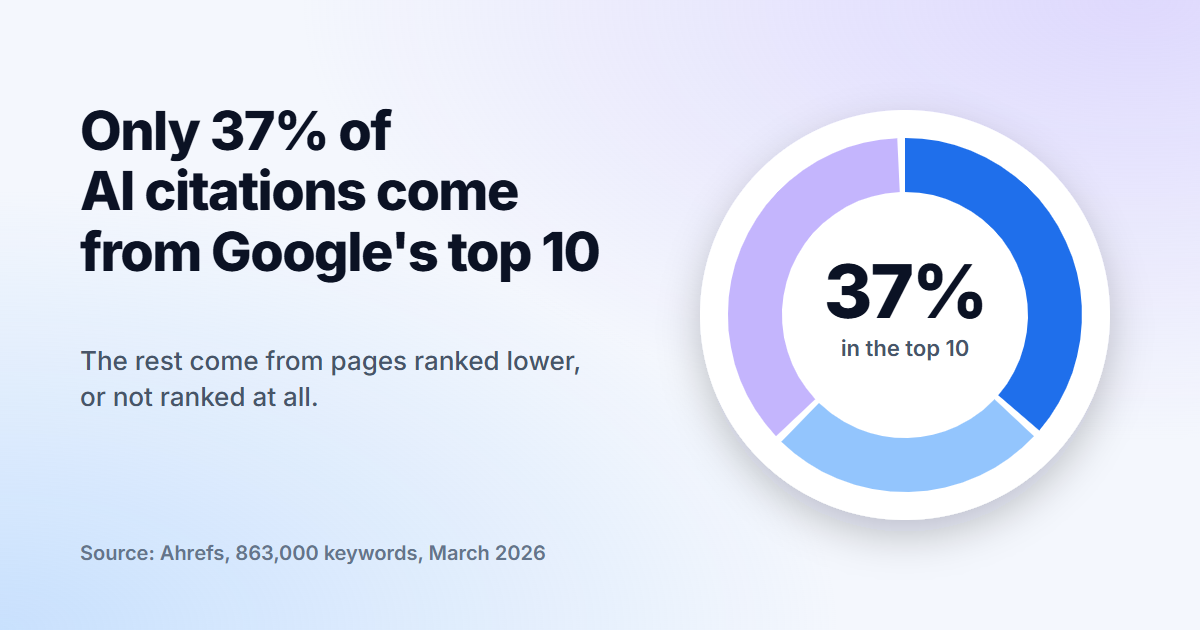
In early 2026 Ahrefs looked at 863,000 keywords to see where Google's AI Overviews take their sources from. Ranking well still helps, but it is far from the whole story.
An earlier Ahrefs study, which counted only the first three citations in each answer, put the top 10 share at 76%. Read together, the message is the same: answer engines go well beyond page one to find the passage they need.
What makes a passage worth quoting
Researchers tested this directly in a study published at KDD 2024, a leading data mining conference. They rewrote web pages in different ways and measured how much of each page made it into generative answers. Adding statistics, adding quotations from relevant sources and citing sources raised visibility by 30 to 40% on their main measure. Keyword stuffing, the old SEO habit, didn't help.
The passages that are easiest to quote tend to share four traits. They answer one question in their first sentence. They make sense on their own, without "as mentioned above". They carry something specific, such as a number, a name, a standard or a date. And they sit under a heading that says what they answer.
What to change on your site
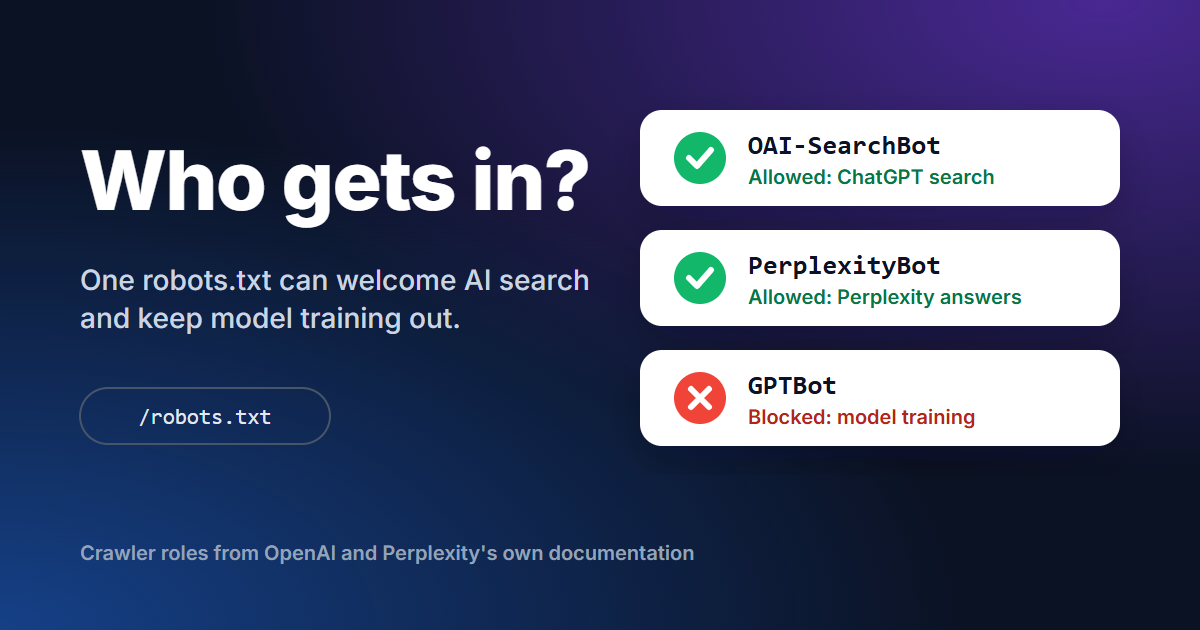
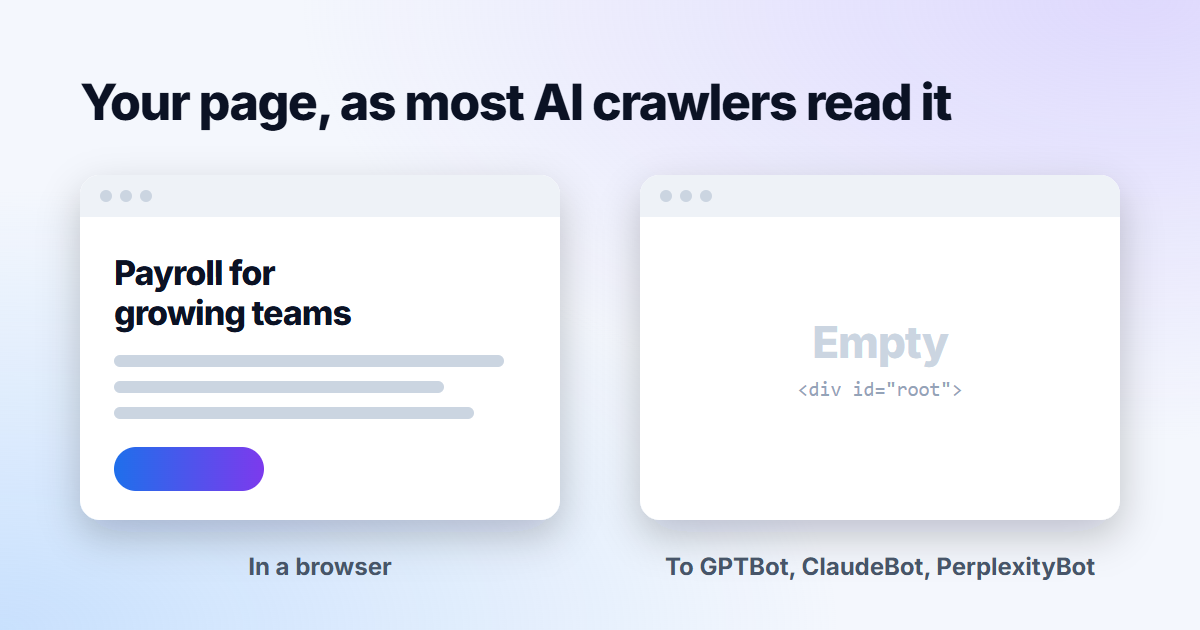
- Make sure crawlers can reach you. A page blocked in robots.txt, or one whose text only appears after JavaScript runs, can't be quoted. Our guides on robots.txt and JavaScript sites cover both.
- Write for the follow-up questions. List what buyers ask on the way to a decision, such as price, fit, integrations, compliance and alternatives, and make sure one page answers each of them plainly.
- Lead with the answer. Put the direct answer in the first sentence under each heading, then the detail.
- Back claims with specifics: figures, customers you're allowed to name, standards you meet. A superlative gives an engine nothing to cite.
- Keep pages current. Microsoft's Bing team has said generative AI values fresh content, so show when a page was updated and keep prices and facts correct.
How GEOFLAKES checks this
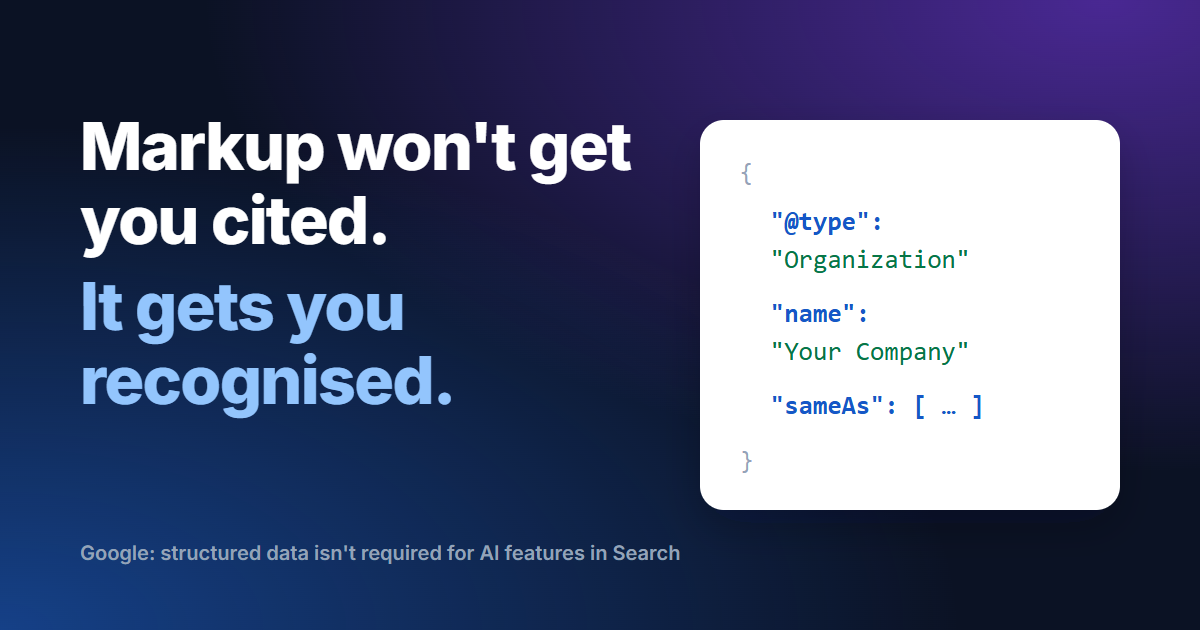
Every audit grades your pages from A to F on how easily an answer engine can quote them, and quotes the weakest passage on each so you can see what to rewrite. It also checks the basics that decide whether you can be cited at all: crawler access, text in the HTML your server sends, and structured data. With the Answer Engine Visibility add-on, we put buyer questions from your field to the engines themselves and show which brands they recommend, yours included.
Sources
- Optimizing for generative AI features on Google Search (Google Search Central)
- 38% of AI Overview citations pull from the top 10 (Ahrefs, March 2026)
- GEO: Generative Engine Optimization (Aggarwal et al., KDD 2024)
- Microsoft Bing/Copilot use schema for its LLMs (Search Engine Land, March 2025)